
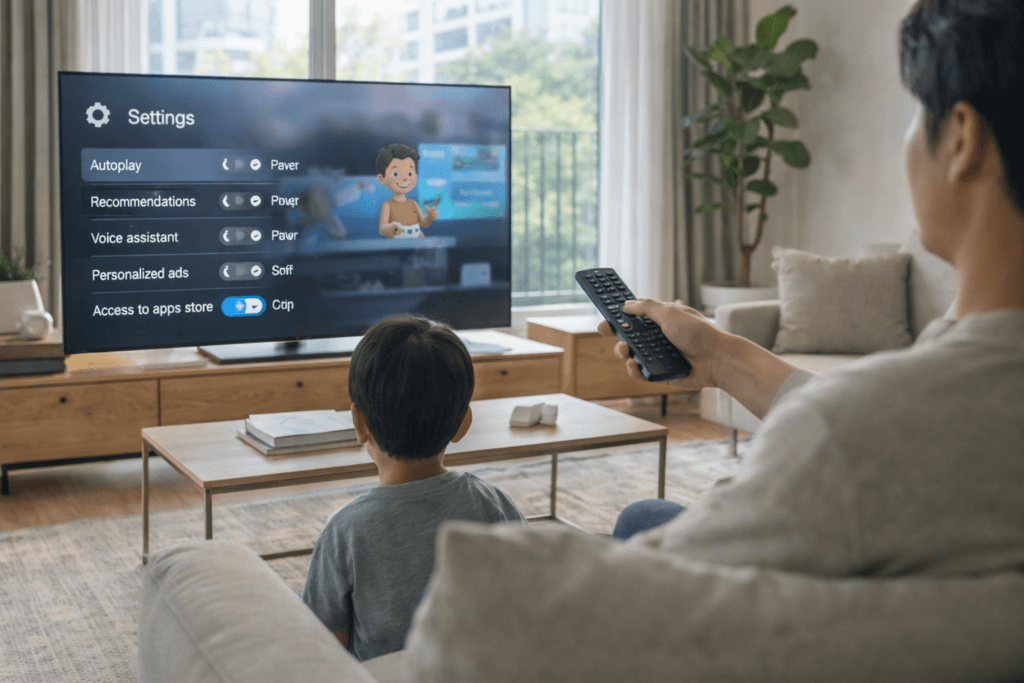

Why Parents Are Turning Off Smart TV Features for Kids
Turning off smart TV features for kids has become a common parenting decision in 2026. More parents are realising that autoplay, AI recommendations, and always-on smart features can negatively impact screen habits, attention span, and family routines.
Smart TVs were once a simple source of family entertainment. But in 2026, many parents — myself included — are rethinking how “smart” these screens really are for kids.
As televisions become more connected, AI-driven, and personalised, families are quietly choosing to turn off smart TV features. Not because technology is bad — but because control matters more than convenience.
Smart TVs Are Smarter Than Ever — And That’s the Concern
Modern smart TVs now include:
- AI-powered content recommendations
- Autoplay on streaming apps
- Built-in voice assistants
- Personalised ads based on viewing behaviour
While these features are marketed as helpful, they often push children into longer, less intentional screen time. This mirrors a broader trend we’re seeing across family technology, similar to how proactive smart homes are evolving in 2026. (Related: Tech Trends 2026 for Families)
Turning off smart TV features for kids helps parents regain control over screen time, reduce autoplay addiction, and protect children from aggressive AI recommendations.
Autoplay Turns Screen Time Into Endless Viewing
One of the first features parents disable is autoplay.
What starts as “one episode” often becomes an hour of uninterrupted viewing. Parents report:
- Kids losing track of time
- Emotional reactions when screens are turned off
- Difficulty shifting to homework or bedtime
The problem isn’t the content — it’s the lack of natural stopping points.
According to child development experts, excessive screen autoplay can reduce attention span in young children (source: https://www.healthychildren.org).
AI Recommendations Aren’t Designed for Children
Smart TVs in 2026 rely heavily on AI recommendation engines designed to maximise engagement. These systems don’t truly understand family values or child development.
Even with kids’ profiles enabled, parents still see:
- Aggressive content suggestions
- Distracting thumbnails
- Fast-paced recommendations
This concern echoes broader worries around AI-powered consumer technology, which we’ve also explored when comparing emerging devices like wearables and smart interfaces. (See: Smart Ring vs Smart Glasses)
Privacy Is a Growing Worry for Parents
Smart TVs collect more data than many families realise:
- Viewing habits
- Voice commands
- App usage patterns
For parents, especially those already cautious about digital privacy on phones and connectivity tools, this feels intrusive. Similar concerns have already emerged around mobile tech choices like eSIM usage and account security. (Related: eSIM vs Physical SIM OTP Risk)
As a result, many parents disable microphones, ad personalisation, and tracking features entirely.
What Parents Are Turning Off First
In most homes, parents start by disabling:
- Autoplay on streaming apps
- Voice assistants and microphones
- App store access
- AI-based recommendations
- Personalised advertising
Some families even use external streaming devices with tighter parental controls, or limit smart features altogether.
This Isn’t Anti-Tech — It’s Intentional Parenting
Turning off smart TV features doesn’t mean rejecting technology.
Just like families are learning to use AI tools more intentionally in daily life (explored further in Google Gemini Super Gems AI Workflows), parents are choosing how technology fits into their homes.
The TV is becoming a shared family screen again — not an algorithm-driven babysitter.
How Parents Can Create Healthier TV Habits in 2026
Turning off smart TV features for kids doesn’t mean banning screens altogether. Parents are finding success by setting clear viewing times, choosing content manually, and watching together when possible. These small adjustments help children associate screen time with intention rather than passive consumption.
In 2026, many families are also pairing smart TV limits with offline activities, encouraging reading, outdoor play, and creative hobbies. Technology works best when it complements childhood — not replaces it.
Final Thoughts: Sometimes the Smartest Move Is “Disable”
In 2026, parents are sending a clear signal:
Technology should support childhood — not shape it.
By turning off unnecessary smart TV features, families are creating healthier digital boundaries. And sometimes, the most powerful parental control isn’t an app — it’s a conscious decision.
For many families, turning off smart TV features for kids has become a simple but powerful parenting decision in 2026.
Sometimes, pressing “disable” is the smartest feature of all.